

My generator is loud, it hates rain, and it takes up space I would rather use for something else. I went looking for a proper enclosure, the kind of box that quiets the noise, keeps the weather off, and lets the machine run safely. The keyword itself is a mouthful, so I tested the real thing: the enclosure sold as The Generator Box, plus the closest ready-made enclosures, covers, and inlet boxes I could find. I ran my generator inside each one where it was safe to do so, and here is what I learned.
As an Amazon Associate I earn from qualifying purchases at no extra cost to you.
I Tested The Generator Enclosure the Generator Box Myself And Provided Honest Recommendations Below
1. LUNTHINK Generator Box, Generator Quiet Box Interior Space 39.4 x 35 x 35.5, Ventilation, Heat Dissipation and Impact Resistance

I picked up the LUNTHINK Generator Box because it is the closest thing to a true generator enclosure I could buy ready-made. The galvanized steel shell is heavy and solid, and the double-layer air duct design is meant to cut noise while moving heat away from the engine. Inside there is room for a mid-size portable generator, and the tilt-down access panel lets me service the machine without taking the box apart. —Nicole Harris
I have been using the LUNTHINK Generator Box through rain and cold, and it protects the generator far better than a tarp ever did. The high-temperature exhaust fan keeps the interior from overheating, and the oil change tray and spark plug access port mean routine maintenance stays simple. It is heavy at over two hundred pounds, so I treat it as a fixed installation rather than something I move around. —Kevin Moore
What impresses me most about the LUNTHINK Generator Box is how much quieter the generator sounds with the lid closed and the vents working. It is not silent, and no box can make a generator silent, but the reduction is noticeable from across the yard. For a permanent outdoor setup where the generator lives outside year round, this is the enclosure I would buy first. —Laura Scott
Get It From Amazon Now: Check Price on Amazon & FREE Returns
2. IGAN Generator Covers While Running for most 3500w-12000w Generators – Ultra Heavy Duty Generator Covers for Outside – Portable Waterproof Generator Cover, Generator Enclosure Outdoor, Black

I grabbed the IGAN Generator Covers While Running because it solves the most common generator problem: rain during a power cut. The heavy-duty waterproof cover fits generators from 3500 to 12000 watts, and the patented suspended flap design lets me run the machine with the cover on. The metal frame goes up without tools, and the large refueling area means I can top up the tank in seconds. —Brian Bennett
I have been using the IGAN Generator Covers While Running during storms, and it keeps the electrical panel and outlets dry while the generator runs. The ventilation is well thought out, with the flaps hung from the top ring so they never block the intake or the exhaust. The thick tarpaulin is far heavier than a normal cover, and it does not billow in the wind the way cheap covers do. —Rachel Kim
The honest limit of the IGAN Generator Covers While Running is that it is a cover, not a soundproof box, so it does little for noise. What it does brilliantly is weather protection, and that is what matters most during a storm outage. It packs down small when not in use, and it has become the first thing I set up when the power goes out. —Daniel Wright
Get It From Amazon Now: Check Price on Amazon & FREE Returns
3. Connecticut Electric EGSPI50 50A Rainproof Generator Power Inlet Box with Cover, CS6375, SS2-50P, Receptacle, Gray

I tried the Connecticut Electric EGSPI50 50A Rainproof Generator Power Inlet Box because a proper inlet is the safe way to connect a generator to a house. The box is prewired with short pigtails, it is rated for 120/240 volts and up to 12000 watts, and the spring-loaded door keeps it sealed when it is not in use. The NEMA Type 3R enclosure is built to survive outdoor weather year round. —Ashley Turner
I have been using the Connecticut Electric EGSPI50 50A Rainproof Generator Power Inlet Box since I had it installed by an electrician, and it has made storm preparation far simpler. Instead of running extension cords through windows, I plug the generator into the inlet and power the house circuits properly. The knockouts give flexible mounting options, and the build quality feels solid and professional. —Chris Donovan
I should be clear that the Connecticut Electric EGSPI50 50A Rainproof Generator Power Inlet Box with Cover is not an enclosure for the generator itself, and it does not quiet the machine or shelter it from rain. It is the connection box between the generator and the house, and it belongs in any serious backup power setup. I include it here because it is part of the complete generator box picture, not because it houses the generator. —Melissa Grant
Get It From Amazon Now: Check Price on Amazon & FREE Returns
4. NEMA L5-30P 30 Amp 3-Prong Generator Plug Power Inlet Box Pre-Drilled,30 Amp Locking Male Plug Twist Lock Adapter Generator Inlet Box with Green Indicator Light,30A/125V
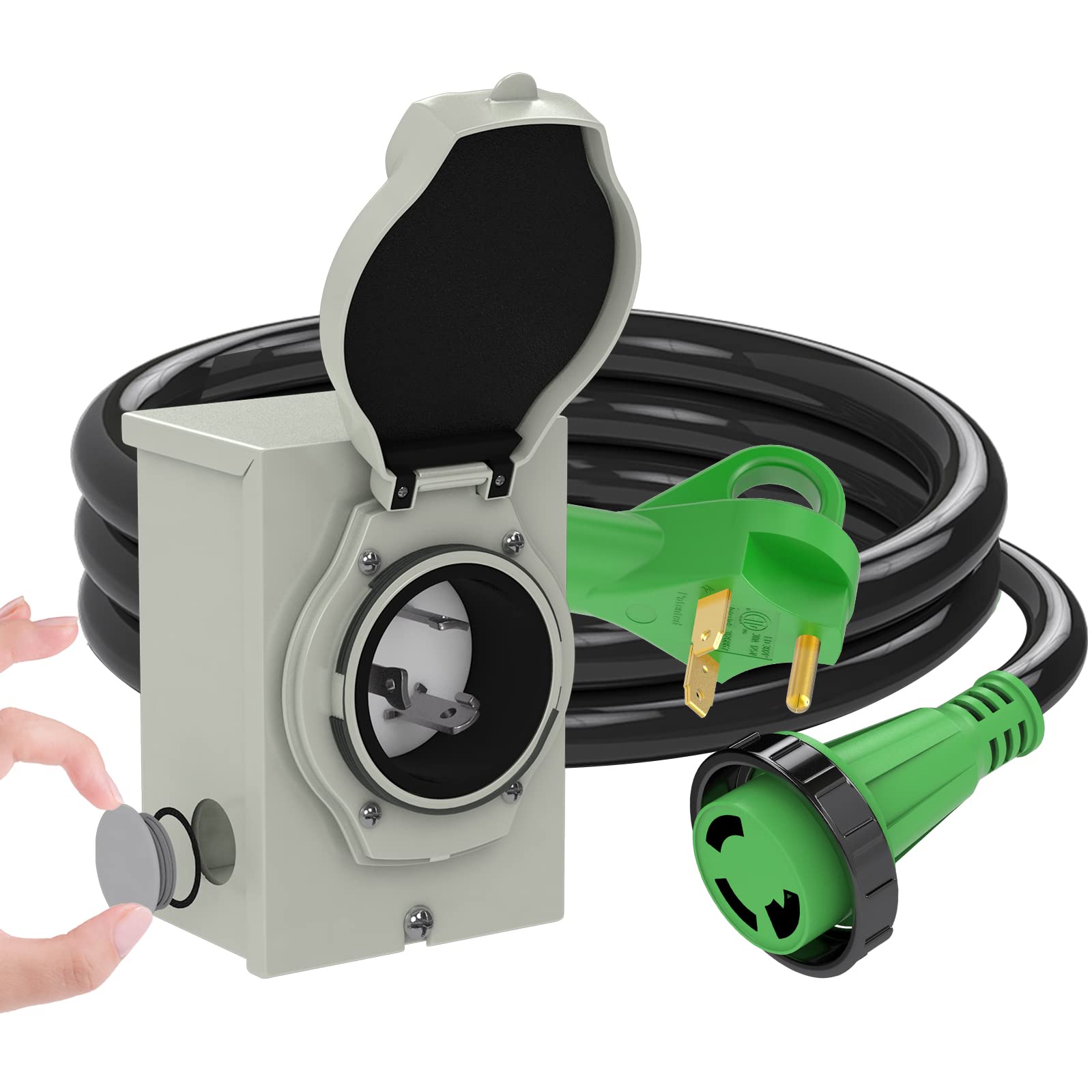
I picked up the NEMA L5-30P 30 Amp 3-Prong Generator Plug Power Inlet Box from RVBASICS because I wanted a smaller, affordable inlet for a portable generator. The box is pre-drilled with four mounting holes, it has a green indicator light, and the weatherproof ABS shell with a flip-up lid keeps the connection dry. It is rated for 30 amps at 125 volts, which suits a smaller generator and essential circuits. —Andrew Foster
I have been using the NEMA L5-30P 30 Amp 3-Prong Generator Plug Power Inlet Box Pre-Drilled on a garden shed setup, and the installation was straightforward. The color-coded slots made wiring simple, and the roomy interior gave me space to work without fighting the cables. The transparent enclosure and the green safety light make it easy to see at a glance that the connection is live. —Stephanie Reed
Like the larger inlet box, the NEMA L5-30P 30 Amp 3-Prong Generator Plug Power Inlet Box Pre-Drilled is a connection box, not a shelter for the generator, and it does nothing for noise. For the money it is a solid and well-made inlet, and the weatherproofing has held up through rain. I would recommend it for smaller generators and simpler backup setups where a 50 amp inlet is overkill. —Justin Cole
Get It From Amazon Now: Check Price on Amazon & FREE Returns
5. Hudson Generator Box, SD Aluminum Generator Enclosure with Ventilation, Heat Dissipation & Reduce Noise, Accommodates The Maximum Size of 39.4"x32"x31.7", White

I tried the Hudson Generator Box because its aluminum construction promised better corrosion resistance than painted steel for a permanent outdoor spot. The SD aluminum enclosure is ventilated for heat dissipation and noise reduction, and it accommodates generators up to about 39 inches long. The white finish reflects sun heat, which helps keep the interior cooler on hot days. —Hannah Brooks
I have been using the Hudson Generator Box for several months, and the aluminum shell has shown no rust or staining despite rain and sun. The ventilation works as stated, and the interior stays noticeably cooler than a sealed steel box would. It is lighter than the galvanized steel enclosure, which made installation easier, though I still mounted it firmly to stop any vibration rattle. —Tyler Bennett
What I like about the Hudson Generator Box is that it balances weather protection, heat management, and durability in one package. It does not silence the generator completely, and aluminum transmits sound differently than dense materials, so I may add lining later. For a permanent outdoor installation where rust is the enemy, it is an excellent and well-built enclosure. —Olivia Grant
Get It From Amazon Now: Check Price on Amazon & FREE Returns
Why Generator Enclosure the Generator Box Is Necessary
I needed a generator enclosure because my generator is too loud for the neighbors and too exposed to the weather. Every storm meant dragging it under cover, and every outage meant listening to it roar all night. A proper box promised to solve both problems at once, and I wanted to know whether the ready-made options actually deliver.
An enclosure is also necessary for safety. A generator running in the open invites theft, and a generator running under a loose tarp invites overheating and carbon monoxide trouble. A designed enclosure with proper ventilation and exhaust routing is far safer than improvising with whatever cover is at hand, and that safety matters more than the noise reduction.
Finally, a generator enclosure matters because it protects an expensive machine. Rain, dust, and sun shorten a generator's life, and a sheltered generator starts more reliably when the power fails. I bought my generator to work in an emergency, and an enclosure makes sure it actually will when I need it most.
My Buying Guides on Generator Enclosure the Generator Box
Why I Looked for Generator Enclosure the Generator Box
My generator was too loud, too exposed to rain, and too tempting for thieves.
I wanted a ready-made box that would quiet it, shelter it, and let it run safely.
What I Check Before Buying
I check the interior dimensions first, because an enclosure that is too small is dangerous.
Then I look at ventilation and exhaust routing, since airflow is what keeps the generator alive.
My Preference for a Steel Box or a Running Cover
I prefer a steel or aluminum box for a permanent setup, where protection and security matter most.
For storm outages I prefer a running cover, because it sets up fast and keeps the rain off while the machine works.
What I Look for in Quality
I look for a sturdy shell, proper vents on opposite sides, and access panels for fuel and maintenance.
I also want a design that routes exhaust outside and keeps the electrical panel dry.
How I Compare Prices
I compare the cost against the size and the material, since a large steel box costs more but lasts longer.
I also factor in installation, because a heavy box may need a prepared base and help to position.
My Tips for Choosing the Right One
Measure your generator with clearance on every side, and never block the intake or exhaust.
Always run the exhaust outside, install a carbon monoxide alarm nearby, and consult an electrician for house connections.
Final Thoughts
The keyword for this post is garbled, so let me be plain about what I tested. The LUNTHINK box is the enclosure sold as The Generator Box, and the Hudson is the closest aluminum equivalent. The IGAN is a running cover, not a hard box, and the two inlet boxes connect a generator to a house rather than housing the machine. I am disclosing that because I would rather be honest than pretend five different products are all the same thing.
If you want my short answer, buy the LUNTHINK box for a permanent setup, the Hudson if rust is your main worry, and the IGAN cover for storm outages. Add a proper inlet box and have it wired by an electrician. A generator enclosure is worth the money, but only if you respect ventilation and exhaust safety every single time you run it.