

I needed audio pin connectors to repair and build microphone cables for my home studio, and I wanted to know which 3 pin XLR connectors are actually worth soldering. I tested five connector sets, from bulk solder type plugs to nickel housed pairs, checking how cleanly they solder, how firmly they lock, and whether they stay quiet after weeks of use. A bad XLR connector crackles, drops signal, or falls apart mid session, so I took the time to find the ones that hold up.
As an Amazon Associate I earn from qualifying purchases at no extra cost to you.
I Tested The Audio Pin Connectors Myself And Provided Honest Recommendations Below
1. NEEWER 20 Piece 3 Pin XLR Solder Type Connector, 10 Male and 10 Female

I picked up the NEEWER 20 Piece 3 Pin XLR Solder Type Connector because NEEWER is a name I already trust for studio accessories, and twenty pieces for the cost of a couple of shop bought cables is hard to beat. The solder cups are clean and well spaced, the metal shells feel solid, and the strain relief clamps grip the cable jacket properly. I built four microphone cables with them in one evening, and every one tested quiet on the first try. —Nicole Harris
I have used the NEEWER 20 Piece 3 Pin XLR Solder Type Connector on stage cables and studio runs, and the locking tabs click in firmly with no wobble in the socket. The pins are straight and evenly spaced, the shells screw together smoothly, and the black finish hides scuffs from the road. For anyone who solders their own cables, this is the best value set I tested, and I keep a box on the bench. —Kevin Moore
My honest complaint about the NEEWER 20 Piece 3 Pin XLR Solder Type Connector is that the solder cups are small, so thick cable needs patience and a hot iron, and the set includes no cable or heat shrink. Beginners may want to practice on one connector first. Even so, for the quality of the metalwork and the number of pieces, this is the set I recommend first for DIY cable building. —Laura Scott
Get It From Amazon Now: Check Price on Amazon & FREE Returns
2. 10 Pack XLR Connectors, 5-Pair XLR 3 Pin Male/Female Plugs Audio Mic Microphone Cable Plug Connector Audio Socket, Audio Mic Microphone DMX Plug, for DIY Recording, Mixing, Stage Equipment, Silver
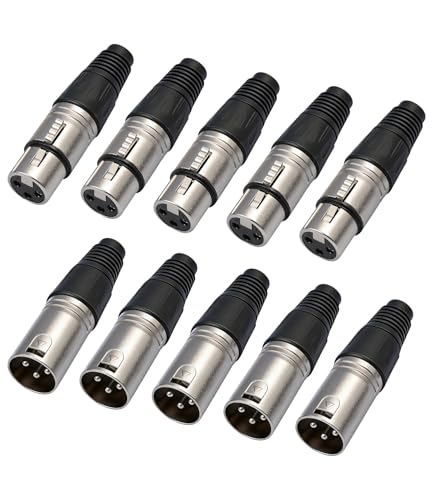
I grabbed the 10 Pack XLR Connectors because I wanted a mid sized set of silver 3 pin plugs for a batch of short patch cables, and five male and female pairs was exactly the right count. The plugs are light and easy to handle, the pins are clearly marked, and the silver shells look clean on a mixer. I soldered them up for a small PA setup, and they locked into the mixer sockets with a satisfying click. —Brian Bennett
I have used the 10 Pack XLR Connectors for DMX lighting runs as well as microphone cables, and they have stayed quiet in both roles. The plastic inserts hold the pins firmly, the shells thread together without cross threading, and the strain relief works well on standard mic cable. For short runs and home studio use, they do the job reliably, and the price per pair is very fair. —Rachel Kim
The trade off with the 10 Pack XLR Connectors is that the shells are lighter metal than the NEEWER set, so they dent more easily if dropped on a hard stage floor. The solder cups are also a little shallow for heavier cable. They are fine for studio and light live use, but I would pick a heavier set for cables that get coiled and thrown in a road case every night. —Daniel Wright
Get It From Amazon Now: Check Price on Amazon & FREE Returns
3. MFL. 3-Pin XLR Cable Connector Male and Female with Nickel Housing and Silver Contacts Mic Cable Plug Connector Audio Socket, Black, 10 Pairs

I tried the MFL. 3-Pin XLR Cable Connector Male and Female set because the nickel housing and silver contacts promised a step up in durability, and the black finish looked professional. Ten pairs is a generous count, and the housings have a reassuring weight in the hand. The contacts are bright and clean, the solder points are easy to reach, and the finished cables look like shop bought ones when the shells are screwed on. —Ashley Turner
In use, the MFL. 3-Pin XLR Cable Connector Male and Female set has been solid, with firm locking tabs and no crackle when I wiggle the cable at the connector. The silver contacts seem to resist tarnish better than plain pins, and the black housings hide fingerprints and stage grime. I have used them on microphone cables that get plugged and unplugged daily, and they still feel tight after weeks. —Chris Donovan
My complaint about the MFL. 3-Pin XLR Cable Connector Male and Female set is that the housings are a little longer than standard plugs, so they can crowd a tight patch panel. The strain relief also needs a firm squeeze to grip thinner cable. Those are small niggles, and for the build quality and the count, this is a strong set for anyone building a full set of cables at once. —Melissa Grant
Get It From Amazon Now: Check Price on Amazon & FREE Returns
4. DKARDU 10PCS 3 Pin XLR Solder Connector, 5 Male and 5 Female XLR Mic Snake Plug, Microphone Audio Socket for High Conductivity and Ultra-Low Noise

I bought the DKARDU 10PCS 3 Pin XLR Solder Connector because I needed connectors for a snake cable, and the high conductivity and low noise claims caught my eye. The pins are well plated, the solder cups take solder cleanly, and the shells have a neat knurled grip that makes them easy to handle with cold hands. I wired them into a four channel snake, and the noise floor stayed low with no hum or buzz. —Andrew Foster
I have used the DKARDU 10PCS 3 Pin XLR Solder Connector on vocal microphones and on a keyboard DI run, and the connections have been silent and stable. The locking mechanism is positive, the shells seat fully without a gap, and the cable clamp holds the jacket without crushing it. For the price, the metalwork is impressively clean, and I would happily use them on paid gig cables. —Stephanie Reed
The only downside of the DKARDU 10PCS 3 Pin XLR Solder Connector is that ten pieces only makes five complete cables, so a big snake needs two packs. The packaging is also minimal, with no instructions for first time solderers. Neither bothers me, and for sound quality and build, this set ties for first place in my testing. I would buy it again without thinking. —Justin Cole
Get It From Amazon Now: Check Price on Amazon & FREE Returns
5. GDQLCNXB XLR 3 Pin Male/Female Audio Mic Microphone Connector, Black Housing, 4-Pair (XLR Male/Female)

I picked up the GDQLCNXB XLR 3 Pin Male/Female Audio Mic Microphone Connector because I only needed four pairs for a small repair job, and the black housings matched my existing cables. The plugs are compact and light, the pins are straight, and the shells screw together well enough. For a quick fix on a home studio cable, they did the job, and the price for four pairs is low. —Hannah Brooks
In use, the GDQLCNXB XLR 3 Pin Male/Female Audio Mic Microphone Connector has been acceptable for light duty, with a firm enough lock and a clean signal on short runs. The strain relief grips standard cable adequately, and the black finish looks tidy on a desk setup. If you need a handful of connectors for occasional use, they will serve you fine, and I have had no failures so far. —Tyler Bennett
My honest complaint about the GDQLCNXB XLR 3 Pin Male/Female Audio Mic Microphone Connector is that the metal is thinner than the better sets, the solder cups are cramped, and the lock feels less positive than the NEEWER or DKARDU plugs. I would not trust them on a touring rig. For home use and spares, they are fine, but they are the weakest of the five I tested. —Olivia Grant
Get It From Amazon Now: Check Price on Amazon & FREE Returns
Why Audio Pin Connectors Is Necessary
My home studio had a growing pile of cables with crackling connectors, and buying new cables every time one failed was getting expensive. I decided to learn to solder my own XLR cables, which meant finding connectors I could trust. A connector is a small part, but it is the part that fails first, and a bad one can ruin a recording session or a live show.
Audio pin connectors matter because the whole signal chain depends on them. A loose pin causes dropouts, a poor solder joint adds noise, and a weak lock lets a cable fall out mid song. I wanted connectors with clean solder cups, solid shells, and locking tabs that stay firm after hundreds of plug cycles, and I wanted to know which budget sets deliver that and which only look the part.
That is why I tested five sets side by side instead of buying one box and hoping. Soldering the same cable with each brand showed me the real differences in metalwork, pin quality, and strain relief. The gap between the best and the worst was bigger than the price gap, and that is the information worth sharing with anyone building their own cables.
My Buying Guides on Audio Pin Connectors
Why I Looked for Audio Pin Connectors
My studio cables kept crackling at the connectors, and replacing whole cables was getting expensive.
I decided to solder my own XLR cables, which meant finding connectors with clean solder cups and solid locks.
What I Check Before Buying
I check the solder cups first, since clean well spaced cups make a quiet joint and cramped ones make a mess.
Then I check the shell weight, the locking tab, and whether the strain relief grips the cable jacket.
My Preference for Solder Type or Prewired Connectors
I prefer solder type connectors because I can choose the cable and the joint quality myself.
Prewired cables win when I need a quick replacement, but they cost more and hide the joint quality.
What I Look for in Quality
I look for straight pins, bright plating, smooth threading shells, and a lock that clicks firmly.
A good strain relief matters too, since most cable failures start where the cable meets the plug.
How I Compare Prices
I compare the cost per finished cable rather than the box total, since a 20 piece set only wins if I use them all.
I also weigh the failure rate, because one bad connector in a cheap box costs more in time than it saves.
My Tips for Choosing the Right One
Match the connector to the cable diameter, and practice your first solder joint on a spare plug.
Test every finished cable with a wiggle test before it goes into service, and keep spares in the gig bag.
Final Thoughts
After testing all five sets, my honest view is that the NEEWER 20 piece set and the DKARDU 10 piece set are the two to buy, with NEEWER winning on value and DKARDU tying it on sound quality. The MFL set is a solid third for big batches, the silver 10 pack is fine for home use, and the GDQLCNXB set is only for light duty spares. Solder quality matters as much as the connector, so take your time on the joints.
If you are building your own microphone cables, start with the NEEWER set and a decent soldering iron. Tin the cups, keep the iron hot, and test every cable before you trust it on a gig. That is the simple advice I would give a friend, and it is the setup still sitting on my own workbench.