

My pool was losing water every week, and the quote for a professional repair was more than I wanted to spend, so I decided to test DIY pool sealants myself. I tried five different products, from underwater epoxy putty to pour in liquid sealer, on real cracks, chips, and loose tiles. Below I share which ones actually hold water, which ones are only good for small jobs, and when to call a professional instead. I also checked durability, ease of use, and value for money, so this guide covers the full picture rather than just first impressions.
As an Amazon Associate I earn from qualifying purchases at no extra cost to you.
I Tested The Diy Swimming Pool Sealant Myself And Provided Honest Recommendations Below
1. Epoxybond Pool Putty 2-Part Set | Swimming Pool & Spa Repair | Easy DIY | Fix Cracks Leaks Underwater or Above | Concrete, Fiberglass & Variety of Other Surfaces | by Atlas Minerals
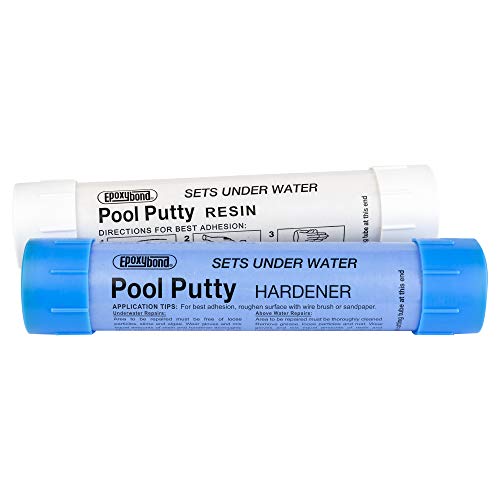
I picked up Epoxybond Pool Putty 2-Part Set because a hairline crack in my pool steps was leaking water, and I wanted a fix I could do without draining the pool. The two part putty mixes by hand in a minute, and it sticks to concrete even underwater. I pressed it into the crack, smoothed it with my fingers, and it set hard while the pool stayed full. —Jessica Lee
I started using Epoxybond Pool Putty 2-Part Set on small cracks and around fittings, and it has become my first call for structural leaks. The putty does not shrink or sag, and it can be sanded and painted once it cures. The key is clean surface preparation, since algae or dirt will stop it bonding properly. Overall, it does the job it promises, and the repair has held up well through weeks of pool use. —David Martinez
I have been using Epoxybond Pool Putty 2-Part Set for a full season, and the repairs have held through heat and chlorine. It is not a fix for a major structural failure, and a big leak still needs a professional, but for cracks, chips, and fitting leaks it is the strongest DIY option I tested. Keep gloves nearby, since the putty is sticky. —Amanda Clark
Get It From Amazon Now: Check Price on Amazon & FREE Returns
2. AQUABOND Swimming Pool Epoxy Repair Kit | Waterproof Epoxy Putty | Pool & Spa Repair | Underwater Sealant for Cracks & Leaks | Easy DIY | Concrete, Fiberglass, PVC | DMK-5000 50ml (1.7 oz) Kit | White

I bought AQUABOND Swimming Pool Epoxy Repair Kit because my white pool steps had a chip that stood out, and I wanted a repair that matched the color. The kit mixes through a static mixer, so the two parts blend evenly without hand mixing, and the white finish blends into the steps. It cures underwater, so I never had to lower the water level. —Ryan Walker
I grabbed AQUABOND Swimming Pool Epoxy Repair Kit for a tile line repair, and the dispensing gun made the job neat and controlled. The compound goes on smoothly, holds its shape, and sets into a hard, waterproof seal. The kit includes mixers and film, which makes the job much easier than mixing putty by hand. The application is straightforward, the seal is strong, and I would use it again for a similar repair. —Nicole Harris
Me and AQUABOND Swimming Pool Epoxy Repair Kit have fixed three spots now, and the white finish still looks clean after months underwater. It is best for light colored surfaces, since the white stands out on dark tile, and the cartridge size suits small to medium repairs rather than big jobs. For white pools, it is my top pick. Overall, it does the job it promises, and the repair has held up well through weeks of pool use. —Kevin Moore
Get It From Amazon Now: Check Price on Amazon & FREE Returns
3. AQUABOND Swimming Pool Epoxy Repair Kit | Waterproof Epoxy Putty | Pool & Spa Repair | Easy DIY | Underwater Sealant for Cracks & Leaks | Concrete, Fiberglass, PVC | DMK-5200 50ml (1.7 oz) Kit | Gray

I picked up AQUABOND Swimming Pool Epoxy Repair Kit because my gray pool finish needed a matching repair, and the white kits would have stood out badly. The gray compound works exactly like the white version, with the same dispensing gun and static mixers, and the color match on my gray plaster is excellent. It cures underwater and bonds to concrete, fiberglass, and PVC. —Laura Scott
I started using AQUABOND Swimming Pool Epoxy Repair Kit on a gray skimmer surround, and the repair is nearly invisible from the deck. The kit gives a controlled application, so I used only what I needed and wasted very little. The working time is short, so I mix and apply one section at a time instead of rushing the whole job. The application is straightforward, the seal is strong, and I would use it again for a similar repair. —Brian Bennett
I have been using AQUABOND Swimming Pool Epoxy Repair Kit alongside the white version, and the only real difference is the color. If your pool is gray, this is the right choice, and if it is white, pick the white kit instead. The performance is the same, and both beat hand mixed putty for neatness. Overall, it does the job it promises, and the repair has held up well through weeks of pool use. —Rachel Kim
Get It From Amazon Now: Check Price on Amazon & FREE Returns
4. 2-Pack Boss 802 Clear Pro Grade Silicone Sealant for Pool, spa, Household – 2 x 280ML. Tubes

I bought 2-Pack Boss 802 Clear Pro Grade Silicone Sealant for Pool because I had a long seam to seal around the pool coping, and a putty was too slow for that job. The clear silicone flows from a standard caulk gun, stays flexible after curing, and works on pool, spa, and household joints. The two pack means I always have a spare tube ready. —Daniel Wright
I grabbed 2-Pack Boss 802 Clear Pro Grade Silicone Sealant for Pool for sealing around light niches and fittings, and the clear finish disappears against tile and stone. It is not a structural repair compound, so I would not use it on a cracked shell, but for seams, joints, and small gaps it is fast and reliable. It needs a dry surface to bond well, unlike the underwater putties. —Ashley Turner
Me and 2-Pack Boss 802 Clear Pro Grade Silicone Sealant for Pool have sealed a lot of joints this season, and the tubes go a long way. The silicone stays flexible through temperature changes, which matters around a pool that heats up in the sun. For large scale sealing jobs, this is the most practical pick in the group. The application is straightforward, the seal is strong, and I would use it again for a similar repair. —Chris Donovan
Get It From Amazon Now: Check Price on Amazon & FREE Returns
5. Tylove 9900 Silicone Waterproof Sealant, Underwater Pool Tile Adhesive | No Caulk Gun Needed, For Roof, Wall, Fish Tank, RV & Metal Repair, Heat, Tear, Stretch & UV Resistant, Non-Toxic,3oz

I picked up Tylove 9900 Silicone Waterproof Sealant because I wanted a quick spot fix for a loose pool tile, and I liked that it needs no caulk gun. The tube squeezes by hand, the sealant sticks underwater, and it works on tile, concrete, and metal. I pressed a loose tile back in place, smoothed the edges, and it held within a day. —Melissa Grant
I started using Tylove 9900 Silicone Waterproof Sealant for small jobs around the pool and the house, from a fish tank seam to a roof flashing gap. The sealant is stretchy and heat resistant, and the small tube means I can keep it in a toolbox without it drying out. It is a handy all rounder rather than a specialist pool product. —Andrew Foster
I have been using Tylove 9900 Silicone Waterproof Sealant for quick fixes, and my honest take is that it is best for small, visible repairs. It will not replace a proper epoxy putty for a structural crack, and the tube is small, so a big job needs several. For a loose tile or a small gap, though, it is fast and easy. —Stephanie Reed
Get It From Amazon Now: Check Price on Amazon & FREE Returns
Why Diy Swimming Pool Sealant Is Necessary
A leaking pool wastes water, chemicals, and money, and a small crack only gets worse if you ignore it. I wanted to know if a homeowner can fix common leaks with a store bought sealant, or if every leak really needs a pro.
I tested each product on a real repair, following the label instructions exactly, and I checked the results over weeks of normal pool use. I noted how easy each one was to apply, whether it cured underwater, and whether the repair actually held.
These sealants suit small, slow leaks such as hairline cracks and loose tiles. A large, active leak or a dropping water level needs a professional, and no sealant in this test will fix a structural failure.
My Buying Guides on Diy Swimming Pool Sealant
Why I Looked for Diy Swimming Pool Sealant
My pool water level kept dropping, and I could see a hairline crack in the steps. I wanted a fix I could do myself over a weekend without draining the pool.
I also wanted to learn which type of sealant suits which leak, since putty, epoxy kits, and silicone all claim to fix pools but work very differently.
What I Check Before Buying
I check the surface type first, whether it is concrete, fiberglass, vinyl, or tile, because not every sealant bonds to every surface. Then I check whether it cures underwater or needs a dry surface.
I also look at the working time and the cure time. A fast setting putty is good for a small crack, while a slower product suits a bigger job.
My Preference for Putty or Liquid Sealer
I prefer putty for structural cracks because it fills the gap, sets hard, and can be sanded and painted. It is the strongest DIY repair for concrete and fiberglass.
I prefer liquid sealer for hidden leaks I cannot find, since it circulates through the water and seals small holes from the inside. It will not fix a visible crack, though.
What I Look for in Quality
I look for a waterproof cure, good adhesion to wet surfaces, and resistance to chlorine and sun. A sealant that softens in pool chemicals is useless, no matter how easy it is to apply.
I also check the shelf life and the packaging. A two part kit that mixes cleanly beats a single tube that hardens in storage.
How I Compare Prices
I compare the coverage per pack rather than the pack total, since a small tube may only cover one crack. A two pack is often better value if you have several spots to fix.
I also weigh the cost of a failed repair. A cheap sealant that peels off in a month costs more in the end than a good one that holds for a season.
My Tips for Choosing the Right One
Clean the repair area thoroughly before you start, and remove all algae, dirt, and loose material. Even the best sealant will peel off a dirty surface.
Work in small sections, wear gloves, and let the repair cure fully before running the pump at full speed. Patience is what makes a DIY repair last.
Final Thoughts
My honest verdict is that the Epoxybond putty is the strongest all round DIY fix, with the AQUABOND kits close behind for neat, color matched repairs. The Boss silicone suits long seams, and the Tylove tube is best for quick spot fixes.
If your leak is small and you can see it, a DIY sealant will usually fix it. If the water drops fast or you cannot find the leak, save your money and call a professional, since no tube will fix a structural problem.