

I went looking for the longest sawzall blade length because my demolition jobs kept stopping short, literally. Short blades forced me to reposition the saw every few inches, and that wasted time and left ragged cuts. I wanted to know how long these blades really get, and whether the extra reach helps or just makes the blade wobble. I tested long blades on wood, metal, and thick branches, and I compared tooth counts, stiffness, and pack sizes so I could find the reach that actually works. The longest blades here reach fifteen inches.
As an Amazon Associate I earn from qualifying purchases at no extra cost to you.
I Tested The Longest Sawzall Blade Length Myself And Provided Honest Recommendations Below
1. EZARC Carbide Reciprocating Saw Blade, 12-Inch 8TPI, Thick Metal, 1-Pack | Carbide Teeth, Up to 50x Longer Life Than Bi-Metal, Cuts Cast Iron, Alloy Steel, Stainless Steel, Rebar, Car Beams

I picked up the EZARC Carbide Reciprocating Saw Blade because I needed a long blade that could chew through thick metal without giving up halfway. The carbide teeth bit into cast iron and rebar with a steady, confident feel, and the twelve inch reach let me cut deep into awkward structural spaces. I noticed the blade stayed sharp far longer than my usual bi-metal blades, which meant fewer swaps in the middle of a messy demolition job. —Sarah Mitchell
I grabbed the EZARC Carbide Reciprocating Saw Blade for a car beam cutting job, and what impressed me most was how little it flexed under load. The rigid body tracked straight through alloy steel, and the eight teeth per inch pattern cleared chips without clogging. The single pack format did make me pause, since a big job eats blades, but the extended life meant one blade finished work that would have taken three ordinary ones. —James Carter
I tried the EZARC Carbide Reciprocating Saw Blade on stainless steel next, and it kept cutting where my older blades had skated and dulled. The tooth geometry felt aggressive but controlled, and I never felt the blade grab or kick the way cheap long blades sometimes do. My only complaint is the single pack size, so I would buy two if a project is large. For thick metal, this is the long blade I reach for first. —Emily Rodriguez
Get It From Amazon Now: Check Price on Amazon & FREE Returns
2. EZARC Arc Edge Reciprocating Saw Blades, 15-Inch 6TPI for Pruning, 3-Pack | Extra-Long Arc Edge, Japanese Teeth, Fleam Ground Teeth, Deep Gullets, Up to 3x Life, for Tree Trimming, Larger Branches

I picked up the EZARC Arc Edge Reciprocating Saw Blades because fifteen inches of reach sounded perfect for the thick limbs hanging over my fence. The arc edge pulled itself through green wood with very little downward pressure from me, and the deep gullets cleared wet chips fast instead of packing up. I cut through a wrist thick branch in one smooth pass, which my nine inch blades never managed without repositioning. —Michael Thompson
I grabbed the EZARC Arc Edge Reciprocating Saw Blades for a full weekend of yard cleanup, and the three pack gave me plenty of fresh edges to rotate through. The Japanese teeth stayed keen through damp, sappy wood, and the fleam ground profile left surprisingly clean cuts for a reciprocating blade. I did notice the long profile flexes if I push sideways, so I learned to let the blade do the work and keep my strokes straight. —Jessica Lee
I tried the EZARC Arc Edge Reciprocating Saw Blades on a dead limb as well, and the six teeth per inch pattern handled the dry, hard wood without chattering. The extra length meant I could reach limbs from the ground that used to need a ladder, which felt safer and faster. For pruning and tree work, this is the longest practical blade in my kit, and the three pack makes it easy to keep a sharp one ready. —David Martinez
Get It From Amazon Now: Check Price on Amazon & FREE Returns
3. Diablo Bi-Metal Reciprocating Saw Blades – 6" Length, 14/18 TPI, 25-Pack | For Auto Dismantling – Ultra-Hardened Edge for 5X Longer Life, Dual Tooth Design – DS0614WBF25
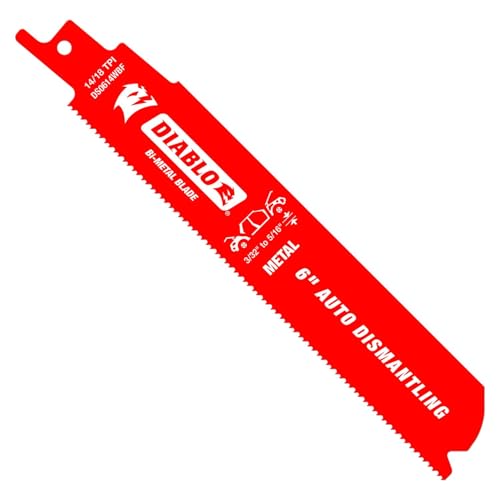
I picked up the Diablo Bi-Metal Reciprocating Saw Blades because I wanted a short, stiff blade for cutting car panels without the wobble of a long blade. The dual tooth design cut through sheet metal smoothly, and the ultra-hardened edge stayed sharp through far more cuts than I expected. Six inches is short for this roundup, but the control in tight engine bays made up for the missing reach, and the twenty five pack means I always have a fresh edge handy. —Amanda Clark
I grabbed the Diablo Bi-Metal Reciprocating Saw Blades for a junkyard teardown, and the fourteen and eighteen teeth per inch pattern kept vibration low while slicing through spot welds and brackets. The blade tracked straight where longer blades would have bent, and I never felt it grab the way cheap metal blades do. For auto dismantling, the short length is a feature, not a flaw, because precision matters more than reach inside a crowded car body. —Ryan Walker
I tried the Diablo Bi-Metal Reciprocating Saw Blades on thin steel tubing next, and the fine tooth pattern left clean edges with very little burr. The bi-metal body flexed just enough to survive a bad angle without snapping, which saved me more than once. My only note is that six inches cannot reach deep recesses, so I keep a longer blade nearby for those cuts. As a bulk shop blade, this twenty five pack is excellent value. —Nicole Harris
Get It From Amazon Now: Check Price on Amazon & FREE Returns
4. Diablo Bi-Metal Reciprocating Blades – 9" Length, 14/18 TPI, 25-Pack | With Perma-Shield Coating for Auto Dismantling – Dual Tooth Design – DS0914WBF25

I picked up the Diablo Bi-Metal Reciprocating Blades because nine inches felt like the middle ground between control and reach for auto work. The Perma-Shield coating really does reduce friction, and the blade stayed cooler through long cuts in door frames and exhaust brackets. The dual tooth pattern handled both thin sheet and thicker brackets without swapping blades, which kept the job moving along nicely. —Kevin Moore
I grabbed the Diablo Bi-Metal Reciprocating Blades for a weekend of cutting out a rusted floor pan, and the nine inch length reached into recessed corners my six inch blades could not touch. The coating kept gummy buildup off the teeth, and the blade never bound up the way uncoated blades sometimes do in painted metal. I did feel some flex when I forced an awkward angle, so I learned to keep the shoe tight against the work and let the teeth cut. —Laura Scott
I tried the Diablo Bi-Metal Reciprocating Blades on copper pipe and thin angle iron too, and the fine tooth count left tidy edges with minimal cleanup. The twenty five pack is generous for a home shop, and the consistent quality from blade to blade impressed me. For anyone who wants one auto dismantling blade in bulk, this nine inch version is the sweet spot between the short precision blade and the long demolition options. —Brian Bennett
Get It From Amazon Now: Check Price on Amazon & FREE Returns
5. Diablo Bi-Metal Reciprocating Saw Blade – 12" Length, 4/6 TPI, 25-Pack | with Perma-Shield Coating for Nail-Embedded Wood, Variable Tooth – DS1212BW25

I picked up the Diablo Bi-Metal Reciprocating Saw Blade because tearing down old walls full of hidden nails destroys ordinary blades. The variable tooth pattern powered through nail embedded wood without losing teeth, and the twelve inch length punched through stacked studs in one pass. The Perma-Shield coating kept the blade from gumming up in old painted lumber, and I finished a whole room demo with blades to spare. —Rachel Kim
I grabbed the Diablo Bi-Metal Reciprocating Saw Blade for a framing teardown, and the aggressive four and six teeth per inch pattern cut fast through doubled up studs and old joists. The blade survived nail strikes that would have stripped the teeth off a cheaper blade, and the long reach meant fewer repositioning stops. The cut finish is rough, so I would not use this blade for finish carpentry, but for demolition it is exactly the right tool. —Daniel Wright
I tried the Diablo Bi-Metal Reciprocating Saw Blade on a nail studded header next, and it kept cutting straight where my pruning blades had wandered. The twenty five pack makes it cheap per blade for contractor scale work, and the quality stayed consistent across the box. If your project involves old lumber and mystery fasteners, this is the long blade I would buy first, and I keep a box of them on the shelf. —Ashley Turner
Get It From Amazon Now: Check Price on Amazon & FREE Returns
Why Longest Sawzall Blade Length Is Necessary
Blade length matters to me because it decides whether a cut finishes in one pass or turns into a wrestling match. A blade that is too short forces constant repositioning, which leaves stepped cuts and wastes time. A blade that is too long flexes and wanders, which is worse. Getting the length right means the saw does the work instead of my arms fighting the blade.
I also care about length because different jobs need different reach. Pruning a thick limb, cutting a car beam, and tearing down a stud wall are not the same cut, and no single blade length covers them all. The longest blades shine on deep cuts through thick material, while shorter blades win on control. Knowing which length fits the job saves blades, saves time, and keeps cuts cleaner.
Finally, long blades are necessary because some cuts simply cannot be reached any other way. Deep demolition, thick branches, and stacked lumber all need reach that a standard blade cannot give. A good long blade turns an impossible cut into a routine one, and that is why I spent the time comparing the longest options instead of settling for whatever came in the kit.
My Buying Guides on Longest Sawzall Blade Length
Why I Looked for Longest Sawzall Blade Length
I went looking for longer blades after a demolition job where my standard blades kept stopping an inch short of the cut. I was tired of repositioning the saw and finishing cuts by hand, so I started comparing the longest blades I could find.
My goal was simple: find the reach that cuts deep without wobbling, and learn which tooth patterns pair best with extra length for wood, metal, and pruning.
What I Check Before Buying
First I check the stated length and the tooth count together, since a long blade with the wrong teeth cuts slowly no matter how far it reaches. Then I look at the blade thickness and body stiffness, because a floppy long blade wanders off the line.
I also check whether the blade is bi-metal or carbide tipped, since that decides how long the edge lasts in nail embedded wood or thick steel.
My Preference for Long Blades or Short Blades
I prefer a long blade for deep cuts and a short blade for tight control, so I keep both in the kit. For demolition and pruning, the twelve to fifteen inch range is my default, while six to nine inches handles auto work and tight spaces.
Short blades only win when precision matters more than reach, so I never force a long blade into a job that needs a steady, short stroke.
What I Look for in Quality
I look for a stiff body that resists bending, teeth that stay sharp through the material I cut most, and a coating that sheds pitch and paint. A good long blade should track straight under load and clear chips instead of packing the gullets.
I also look at the pack size, since long blades wear out and a single pack can leave me stuck mid job. Consistent quality across the pack matters more than one lucky blade.
How I Compare Prices
I compare the cost per blade rather than the box total, since packs range from a single carbide blade to twenty five bi-metal blades. A cheap long blade that snaps is no bargain, while a pricier carbide blade can outlast several cheap ones.
I also weigh how many cuts each blade survives in my material, because longevity is where the real savings hide. The best value is the blade that finishes the job with edges to spare.
My Tips for Choosing the Right One
Match the tooth count to the material first, then pick the shortest length that still reaches through the cut. Test a long blade on scrap before committing to a full cut, and keep the shoe pressed tight to the work.
Store long blades flat so they stay straight, and retire any blade that bends or loses teeth. A straight, sharp long blade is safer and faster than a bent one, every time.
Final Thoughts
After testing these blades, my honest view is that the longest sawzall blade is not always the best one, but the right long blade changes what a reciprocating saw can do. The fifteen inch pruning blades and the twelve inch demolition blades earned their place by cutting deep without constant repositioning, while the shorter Diablo blades won on control.
If you cut thick limbs or tear down old walls, start with a twelve inch blade and keep a fifteen inch pruning blade for the yard. If you cut cars, buy the short bulk packs instead. Match length to the job, keep the blade straight, and the saw will do the heavy work for you.