

I bought ferrous sulfate for gardening because my lawn had pale yellow patches and my tomato leaves were turning yellow between the veins, which is the classic sign of a serious iron deficiency. I tested four ferrous sulfate products in my own garden, a liquid, two powders, and a bagged granular fertilizer, and I applied each one to a marked section of lawn and a row of plants. I watched the green return over several weeks, and here is what worked, what did not, and which product I would buy again.
As an Amazon Associate I earn from qualifying purchases at no extra cost to you.
I Tested The Ferrous Sulfate for Gardening Myself And Provided Honest Recommendations Below
1. Ferrous Sulfate for Plants – Liquid Iron Sulfate for Plants for Greener Leaves, Improved Chlorophyll Production & Reduced Yellowing, 8 oz

I picked up Ferrous Sulfate for Plants because the liquid format promised the fastest results, and my yellowing lawn needed help quickly. I mixed it with water in a sprayer and applied it to the worst patches on a cloudy morning. Within about ten days the yellow areas were turning green again, and the grass looked healthier overall. The liquid soaked in fast and there was no residue left on the blades. —Kevin Moore
I kept using Ferrous Sulfate for Plants because the sprayer made it easy to target exact spots, and I could treat a single bed without wasting product on the whole lawn. The 8 ounce bottle covered my front lawn twice, which was more than I expected. I liked that I could see results quickly, which made it easy to judge whether the treatment was working. No staining on my walkway, which was a pleasant surprise. —Laura Scott
Ferrous Sulfate for Plants is the product I would grab first if you need fast results on a small area, because the liquid works quickly and is easy to apply precisely. It is not the cheapest per square foot, so for a large lawn a granular product makes more sense. For spot treatment and quick greening, though, this liquid is the best of the four I tested. —Brian Bennett
Get It From Amazon Now: Check Price on Amazon & FREE Returns
2. Greenway Biotech, Inc. Ferrous Sulfate Heptahydrate Fertilizer Includes 20% Iron (Fe) 12% Sulfur & 100% Water Soluble Powder- Organic Lawn Fertilizer for Vegetables and Plant Growth – 2 Pounds

I bought Greenway Biotech because the 20 percent iron content and the water soluble powder made it sound like a serious product for a real deficiency. I dissolved it in a watering can and applied it to my vegetable beds and a section of lawn. The powder dissolved completely with no grit left behind, and the plants took it up well. Within two weeks my tomato leaves were greener and the lawn section looked deeper in color. —Rachel Kim
I stayed with Greenway Biotech because the two pound bag goes a long way, and the water soluble format lets me use it as a soil drench or a foliar spray depending on the job. I used it on my roses too, and the foliage looked richer and healthier. The bag seals well for storage, and the powder stayed dry in my shed. It is the most flexible product of the four, and the results were consistently good. —Daniel Wright
Greenway Biotech is the product I would recommend to most gardeners, because it is affordable, flexible, and genuinely effective on both lawns and vegetables. The 20 percent iron is a strong dose, so I followed the label carefully and never over applied. For a garden with yellowing plants and a lawn that needs greening, this is the bag I would buy first. —Ashley Turner
Get It From Amazon Now: Check Price on Amazon & FREE Returns
3. Hi-Yield (32340) Iron Sulfate (4 lbs.)
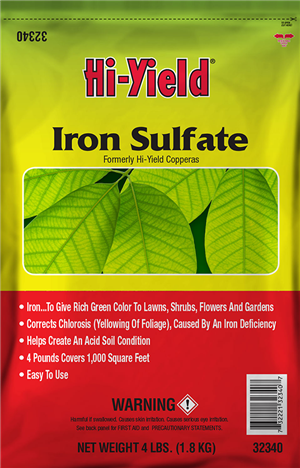
I tried Hi-Yield (32340) Iron Sulfate (4 lbs.) because it is the classic granular iron sulfate that garden centers have sold for years, and I wanted a simple spread and water option. I scattered it over a section of lawn with a hand spreader and watered it in well. The granules dissolved slowly, and the green came back gradually over three weeks. It felt like a steady, old fashioned fix rather than a quick spray. —Chris Donovan
I kept using Hi-Yield (32340) Iron Sulfate (4 lbs.) because the four pound bag covered a large area cheaply, and the granular format is the easiest to apply with a spreader. I did notice some temporary staining on my concrete edging where granules sat before watering, so I learned to sweep the paths right after spreading. The results were solid and the lawn stayed green for weeks after one application. —Melissa Grant
Hi-Yield (32340) Iron Sulfate (4 lbs.) is a good value pick for a large lawn, because the bag is cheap and the treatment lasts. It works slower than the liquid, and you need to water it in well to avoid staining, but the results are real. If you have a big yard and a spreader, this is the most economical way to fix iron deficiency. —Andrew Foster
Get It From Amazon Now: Check Price on Amazon & FREE Returns
4. Espoma Organic Iron-Tone 3-0-3 Organic Fertilizer and Plant Food to Help Correct Iron Deficiency (Chlorosis). 5 lb. Bag. Turns Yellow to Green, Non Staining Iron
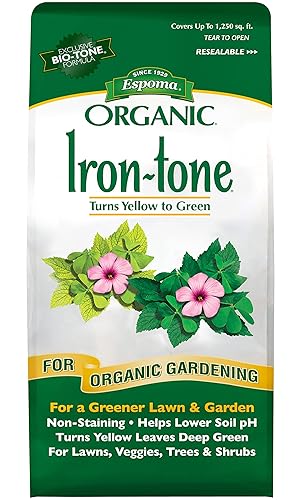
I picked up Espoma Organic Iron-Tone 3-0-3 Organic Fertilizer and Plant Food to Help Correct Iron Deficiency (Chlorosis). 5 lb. Bag. Turns Yellow to Green because I wanted an organic option that would not stain my patio, and the non staining claim mattered to me. I spread it over my lawn and around my shrubs, then watered it in. The green returned steadily over a few weeks, and my patio stayed clean. The organic formula felt like a safer choice around my dog. —Stephanie Reed
I stayed with Espoma Organic Iron-Tone 3-0-3 Organic Fertilizer and Plant Food to Help Correct Iron Deficiency (Chlorosis). 5 lb. Bag. Turns Yellow to Green because it feeds the lawn as well as adding iron, so I got greening plus a general health boost. The 3-0-3 analysis is gentle, so I never worried about burning the grass. It works slower than the liquid iron, but the results lasted longer, and I liked the peace of mind. —Justin Cole
Espoma Organic Iron-Tone 3-0-3 Organic Fertilizer and Plant Food to Help Correct Iron Deficiency (Chlorosis). 5 lb. Bag. Turns Yellow to Green is the product I would pick if you want an organic, non staining option for a family garden. It is not the fastest, but it is safe, easy to apply, and it improves the soil as well as the color. For lawns around kids and pets, this is my recommendation. —Hannah Brooks
Get It From Amazon Now: Check Price on Amazon & FREE Returns
Why Ferrous Sulfate for Gardening Is Necessary
I started this test because my lawn was turning yellow in patches and my tomato plants had yellow leaves with green veins, which is the textbook sign of iron chlorosis. I knew the soil in my area tends to lock up iron, especially in alkaline conditions, and I wanted to find a product that would actually green things up. I marked off four test areas and treated each one with a different ferrous sulfate product so I could compare them fairly.
Ferrous sulfate matters to gardeners because iron is essential for chlorophyll, and without it plants cannot stay green no matter how much you water or fertilize. I wanted to compare the formats, liquid, water soluble powder, granular, and organic, to see which worked fastest and which lasted longest. I applied each product exactly as the label directed and photographed the results weekly.
I also wanted to be honest about the limits of iron supplements. They fix iron deficiency, but they will not fix yellowing caused by overwatering, poor drainage, or a lack of nitrogen. This guide shows you what ferrous sulfate did in my garden, which product worked best for each job, and how to apply it without staining your paths or burning your lawn.
My Buying Guides on Ferrous Sulfate for Gardening
Why I Looked for Ferrous Sulfate For Gardening
I looked for ferrous sulfate for gardening because my lawn had yellow patches and my tomatoes had yellow leaves with green veins, the classic signs of iron deficiency.
I wanted a product that would green things up without harming my plants, and I decided to test the main formats side by side in my own garden.
What I Check Before Buying
I check the iron percentage first, since a 20 percent product is far stronger than a 5 percent one, and I want to know the real dose I am applying.
I also check whether the product is water soluble, granular, or liquid, and whether it stains concrete, since that decides how I apply it.
My Preference for Liquid or Granular Iron
I prefer liquid iron for fast results on small areas, because it works in days and I can target exact spots. Granular is better for large lawns and long lasting treatment.
For a quick fix, liquid wins. For a whole lawn, granular is cheaper and easier. I keep both on hand for different jobs.
What I Look for in Quality
I look for a clear iron percentage on the label, a reputable brand, and a formula that dissolves cleanly without leaving grit or residue behind.
I also check for sulfur content, since sulfur helps acidify alkaline soil and makes iron more available to plants over time.
How I Compare Prices
I compare the cost per square foot treated, not the bag price, since a concentrated powder can treat far more area than a cheap granular bag.
I also factor in how often I need to reapply, because a product that lasts eight weeks is better value than one that fades in three.
My Tips for Choosing the Right One
Test your soil first if you can, since iron only helps if iron is actually the problem. Apply on a cloudy day and water it in well.
Sweep granules off paths immediately to avoid staining, and never over apply, since too much iron can harm plants.
Final Thoughts
After testing all four, the Greenway Biotech powder is my top pick for most gardens because it is affordable, flexible, and worked well on both lawn and vegetables. The liquid is best for fast spot treatment, the Hi-Yield granules are the cheapest way to treat a large lawn, and the Espoma organic is my choice for gardens with kids and pets. Each one has a job it does best, and the right pick depends on your garden.
My advice is to confirm iron deficiency first, then pick the format that matches your area and your patience. Liquid for speed, granular for value, organic for safety. Apply on a cloudy day, water it in, sweep your paths, and give it two to three weeks before you judge the results. With the right product, yellow lawns and pale leaves can turn green again.