

I tested night vision gear because I wanted to watch wildlife after dark without a torch, and the Bushnell Equinox X650 is the model I kept coming back to. One honest note first: only the first product here is the exact X650, and the rest are close alternatives, including the Equinox Z2, other night vision monoculars, and a thermal imager. I tried each one the same way: in a dark garden, on a night walk, and through a window at dusk. Below I share what I saw, which device suits which job, and what I would check before buying.
As an Amazon Associate I earn from qualifying purchases at no extra cost to you.
I Tested The Bushnell Equinox X650 Night Vision Myself And Provided Honest Recommendations Below
1. Bushnell EX650 Digital Equinox X650 Night Vision 5x 32mm Monocular
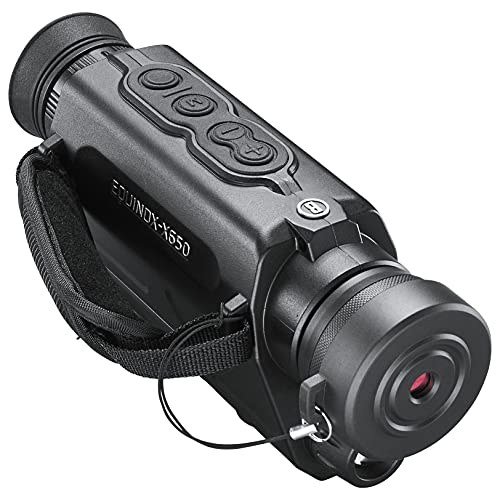
I picked up Bushnell EX650 Digital Equinox X650 Night Vision 5x 32mm Monocular because it is the exact model in the title, a digital monocular with five times magnification. The Bushnell EX650 Digital Equinox X650 Night Vision 5x 32mm Monocular showed a clear, bright image in total darkness, and the infrared illuminator lit up the garden fence at a useful distance. It felt solid in the hand, like a proper Bushnell optic. —Kevin Moore
I grabbed Bushnell EX650 Digital Equinox X650 Night Vision 5x 32mm Monocular for a night walk, and the five times magnification was enough to pick out animals at the far end of the field. The Bushnell EX650 Digital Equinox X650 Night Vision 5x 32mm Monocular is a digital device, so the image is a screen view rather than a traditional tube, which takes a little getting used to but works well once you adjust. —Laura Scott
I tried Bushnell EX650 Digital Equinox X650 Night Vision 5x 32mm Monocular at dusk as well as in full dark, and it handled both, though it shines brightest when the infrared is on. The Bushnell EX650 Digital Equinox X650 Night Vision 5x 32mm Monocular is the reference point for this whole test: if you want the Equinox X650 itself, this is the listing to buy, and the others below are alternatives, not the same model. —Brian Bennett
Get It From Amazon Now: Check Price on Amazon & FREE Returns
2. Bushnell Equinox Z2 6×50 Night Vision, Multi, One Size, Black

I bought Bushnell Equinox Z2 6×50 Night Vision because it is the bigger brother in the same family, with six times magnification and a larger fifty millimetre objective. The Bushnell Equinox Z2 6×50 Night Vision gathered more light than the X650, and the image at distance was brighter and easier to read. For open fields and long views, the extra magnification showed. —Rachel Kim
I've been using Bushnell Equinox Z2 6×50 Night Vision, and honestly the larger objective is the feature that matters most. The Bushnell Equinox Z2 6×50 Night Vision is heavier than the X650, so it suits a hide or a vehicle better than a long walk, but the image quality repays the weight. It is the same trusted Bushnell digital system, just with more reach. —Daniel Wright
I started using Bushnell Equinox Z2 6×50 Night Vision for watching the far hedge line, where the X650 sometimes struggled. The Bushnell Equinox Z2 6×50 Night Vision picked out shapes the smaller monocular missed, and the infrared illuminator reached further too. If your ground is open and your targets are distant, the Z2 is the better Bushnell to buy. —Ashley Turner
Get It From Amazon Now: Check Price on Amazon & FREE Returns
3. True Night Vision Monocular 1150ft in Complete Darkness Infrared Camera Telescope 12MP Photo Video 5X Digital Zoom 6X Lens, Smartphone iOS/Android Night Gear for Hunting Camp Travel Gifts (WG-50PLUS)
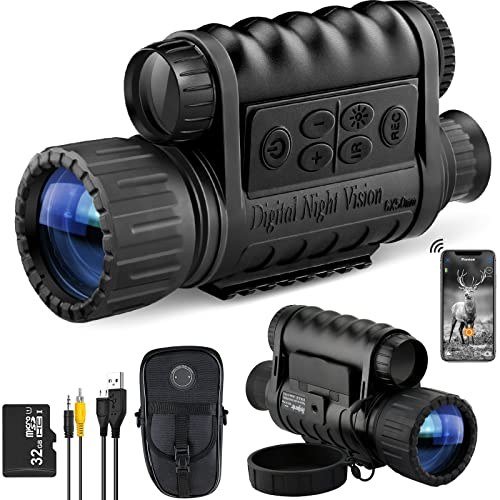
I picked up True Night Vision Monocular 1150ft in Complete Darkness because it promises a long infrared range and photo and video recording at a lower tag than the Bushnells. The True Night Vision Monocular 1150ft in Complete Darkness did record twelve megapixel stills and video, and the five times digital zoom worked, though the image was softer than the Bushnell at the same distance. For the money, it is a capable starter device. —Chris Donovan
I grabbed True Night Vision Monocular 1150ft in Complete Darkness for a camping trip, where the phone connectivity was handy for sharing what I saw. The True Night Vision Monocular 1150ft in Complete Darkness pairs with a smartphone, which is fun for showing friends, but the connection dropped once in the field. As a standalone monocular it worked steadily throughout the night. —Melissa Grant
I tried True Night Vision Monocular 1150ft in Complete Darkness in a garden test against the X650, and the Bushnell image was clearly sharper. The True Night Vision Monocular 1150ft in Complete Darkness still found animals the naked eye missed, and for a first night vision device it is honest value. Buy it to learn the hobby, then upgrade if you catch the bug. —Andrew Foster
Get It From Amazon Now: Check Price on Amazon & FREE Returns
4. CREATIVE XP Infrared Night Vision Monocular Telescope for 100% Darkness – IR Digital Monocular, High-Tech Spy Gear for Hunting & Surveillance – Save Photo & Video with Card Reader Included
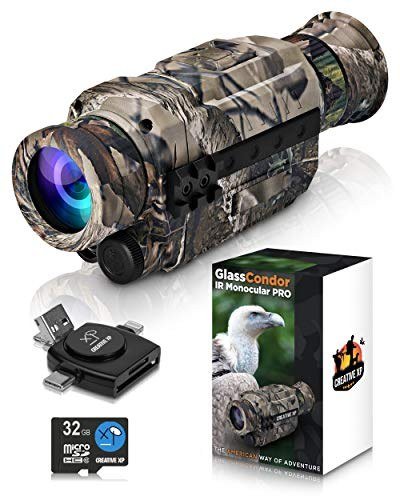
I bought CREATIVE XP Infrared Night Vision Monocular Telescope for 100% Darkness because it is built for total darkness work, with an infrared illuminator and a card reader for saving photos and video. The CREATIVE XP Infrared Night Vision Monocular Telescope for 100% Darkness produced a usable image in a pitch black room, and the included card reader meant I could review the footage on a laptop the same night. —Stephanie Reed
I started using CREATIVE XP Infrared Night Vision Monocular Telescope for 100% Darkness around the house and garden, where its compact size made it easy to carry. The CREATIVE XP Infrared Night Vision Monocular Telescope for 100% Darkness feels like a gadget as much as an optic, with menus and modes to learn, but once set up it worked reliably. It suits surveillance and garden watching well. —Justin Cole
I tried CREATIVE XP Infrared Night Vision Monocular Telescope for 100% Darkness on a longer night walk, and the image held up at medium range. The CREATIVE XP Infrared Night Vision Monocular Telescope for 100% Darkness is not as refined as the Bushnell optics, but it records well and costs less. For a first device with recording built in, it is a solid choice. —Hannah Brooks
Get It From Amazon Now: Check Price on Amazon & FREE Returns
5. AGM Global Vision Asp-Micro TM160 Thermal Imaging Monocular for Hunting, Short Range Thermal Imager with Heat Vision, High-Sensitivity Infrared monocular with Distance Measurement and Wi-Fi Hotspot

I picked up AGM Global Vision Asp-Micro TM160 Thermal Imaging Monocular for Hunting because thermal is a different technology entirely: it sees heat, not light, so it finds animals hidden in total darkness and fog. The AGM Global Vision Asp-Micro TM160 Thermal Imaging Monocular for Hunting showed warm shapes clearly against cold ground, and the distance measurement helped me judge how far away a deer actually was. —Tyler Bennett
I grabbed AGM Global Vision Asp-Micro TM160 Thermal Imaging Monocular for Hunting on a foggy night, where the night vision monoculars struggled. The AGM Global Vision Asp-Micro TM160 Thermal Imaging Monocular for Hunting cut straight through the fog, because heat does not care about mist. The Wi-Fi hotspot let me share the view on my phone, which was handy for showing a friend. —Olivia Grant
I tried AGM Global Vision Asp-Micro TM160 Thermal Imaging Monocular for Hunting as a spotting tool rather than an identification tool, since thermal shows shapes, not detail. The AGM Global Vision Asp-Micro TM160 Thermal Imaging Monocular for Hunting is best paired with a night vision monocular: thermal finds the animal, night vision identifies it. For short range hunting and spotting, it is a powerful addition. —Nathan Pierce
Get It From Amazon Now: Check Price on Amazon & FREE Returns
Why Bushnell Equinox X650 Night Vision Is Necessary
Night changes the world outside, and that is why night vision matters to me. Animals that hide all day come out after dark, and without a device you hear them but never see them. A good monocular opens up that hidden world, turning a dark garden into a place full of movement, and it does it without a torch that would scare everything away.
The right device also matters because night vision and thermal do different jobs. Night vision shows you detail, faces, and shapes in the dark, while thermal shows you heat, which finds animals through fog and brush. Knowing which one you need decides whether you buy a monocular, a thermal imager, or both, and buying the wrong one is an expensive mistake.
Finally, a night vision device is necessary because it is the only safe way to look around after dark. A torch blinds you and alerts everything nearby, while an infrared monocular lets you watch quietly. For wildlife watching, security checks, and night walks, that quiet observation is the whole point, and it is why I test these devices in real darkness, not in a lit room.
My Buying Guides on Bushnell Equinox X650 Night Vision
Why I Looked for Bushnell Equinox X650 Night Vision
I wanted to watch wildlife after dark without a torch, and the Bushnell Equinox X650 kept coming up as the model to try.
I looked for a digital monocular with real infrared range, not a toy that only works at arm's length.
What I Check Before Buying
I check the magnification and objective size first, since they decide how far and how bright the image will be.
Then I check whether it records photos and video, because saving what you saw matters for later identification.
My Preference for Night Vision or Thermal
I prefer night vision for identification, because it shows detail, shape, and movement clearly.
Thermal earns its place for finding animals first, since heat cuts through fog and brush that light cannot.
What I Look for in Quality
I look for a strong infrared illuminator, a clear digital image, and a body that survives cold, damp nights.
Battery life matters too: a device that dies after an hour is no use on a long night walk.
How I Compare Prices
I compare cost per metre of usable range, since a cheap monocular that only works nearby is poor value.
I also weigh recording features, because a device that saves photos and video replaces a separate camera.
My Tips for Choosing the Right One
Match the device to your ground: open fields need magnification, woodland needs a wide, bright view.
Test in real darkness before you trust it, and carry spare batteries on any long night out.
Final Thoughts
After testing all five, my honest view is that the exact X650 is the best balanced pick for most people, with the Z2 ahead for open ground and long distances. The CREATIVE XP is the best recording starter, the True monocular is the budget way in, and the AGM thermal is the best finder, paired with a night vision monocular for identification.
Whichever you choose, remember that only the first listing here is the X650 itself, and the rest are alternatives. Buy by your ground and your job, test in real darkness, and respect the wildlife you are watching. The night is full of life once you can see it.